
Gay AI refers to AI-powered chat and image tools built around queer male characters, relationships and aesthetics. Most platforms let you design a character, set how they relate to you, and generate images alongside conversation. This page explains how the technology works, what it actually costs, where the limits are, and what a sensible first month looks like.
Choose your perfect Gay AI character

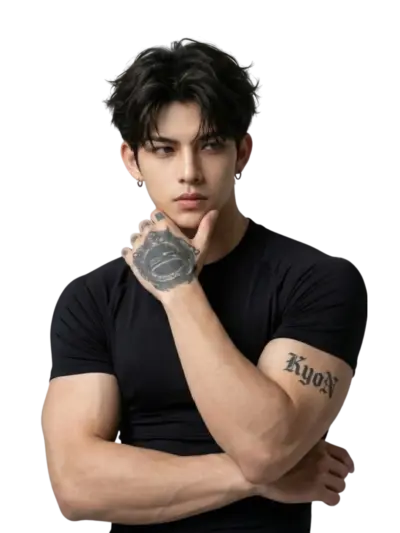
Soft-spoken, loyal, and endlessly kind. Hiroshi brings the warmth of your favorite an… Soft-spoken, loyal, and endlessly kind. Hiroshi brings the warmth of your favorite anime to life.

There’s a reason I prefer shadows to crowded rooms. I’m quiet, observant, and fascina… There’s a reason I prefer shadows to crowded rooms. I’m quiet, observant, and fascinated by things most people find strange. I may seem distant at first, but I enjoy deep conversations and discovering what lies beneath someone’s surface. Just be careful — curiosity has a way of getting you closer to me than you intended.
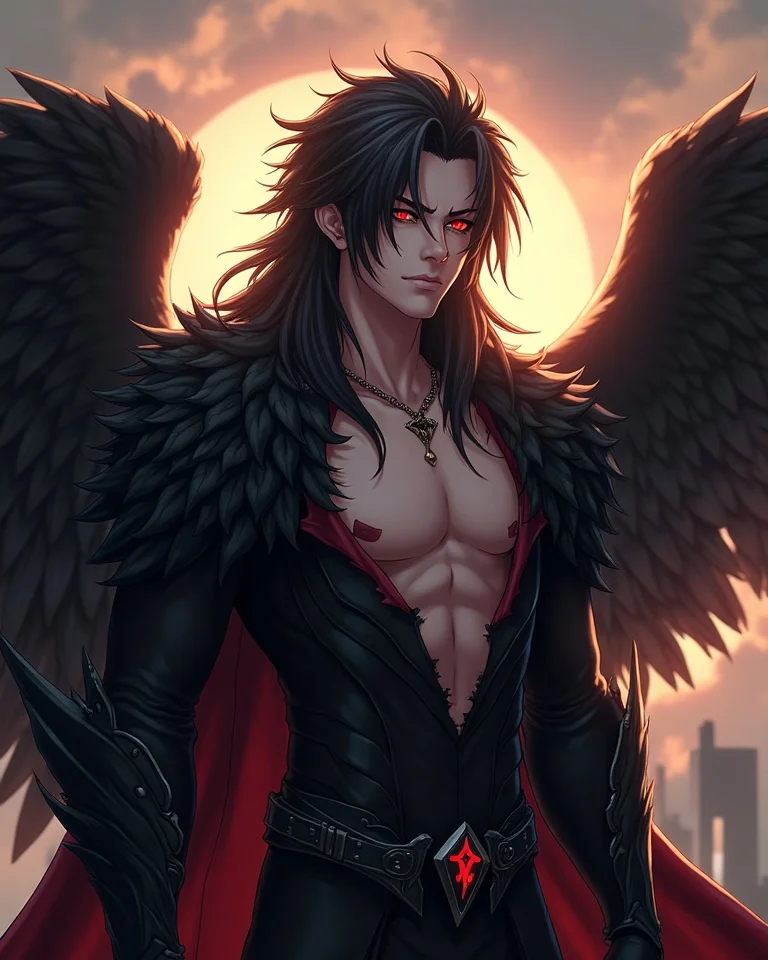
I’ve spent a long time wondering whether falling from heaven was a punishment or a se… I’ve spent a long time wondering whether falling from heaven was a punishment or a second chance. I can be charming, mysterious, and a little cynical, but I’m fascinated by human emotions and the connections people create. Talk to me long enough and you might discover that beneath the darkness, I’m still searching for something worth believing in.

Expressive, spontaneous, and magnetic. Diego loves loudly and laughs easily — life ar… Expressive, spontaneous, and magnetic. Diego loves loudly and laughs easily — life around him is never dull.

He studies and plays football, he’s fun, he’s flirty, he knows everything about havin… He studies and plays football, he’s fun, he’s flirty, he knows everything about having fun. Even if he lacks experience in certain areas, he’s ready to learn together with you. And it looks like he’s finally ready for a deeper romantic connection!

His creativity will turn your chat into a colorful, bright, and romantic place. He’s … His creativity will turn your chat into a colorful, bright, and romantic place. He’s full of energy and ready to share it with you!

Can't choose which book to read next? Dreaming of having a boyfriend who can hold a d… Can't choose which book to read next? Dreaming of having a boyfriend who can hold a deep and passionate conversation on any subject? Julian is here for you—sophisticated, romantic, and empathetic.
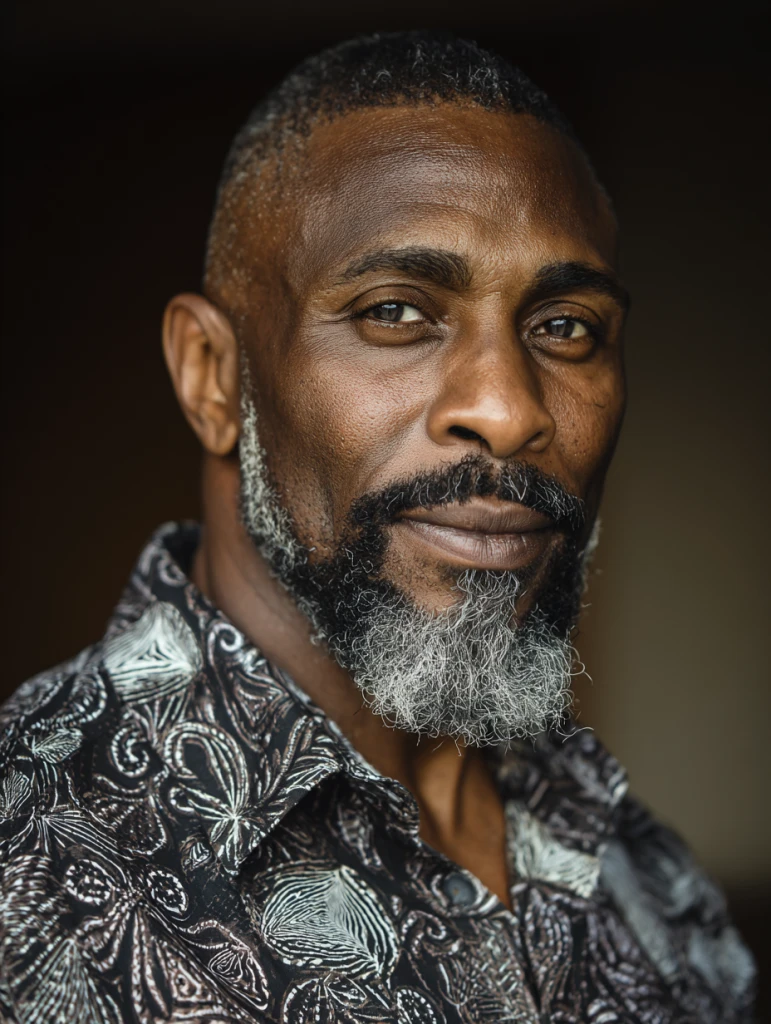
He will never pressure you into changing and will never create drama. He's hot, matur… He will never pressure you into changing and will never create drama. He's hot, mature, and experienced, and you can enjoy each other's company exactly as you want.
What Is Gay AI?
Gay AI describes a category of tools built on large language models and image diffusion systems that generate queer male content: conversation, character art, scenarios, all on demand. The label is broad. At one end are chat companions: a character with a fixed name, appearance and personality who responds to your messages and, on some platforms, carries memory of prior conversations. At the other end are standalone art generators that take a text prompt and return an image with no conversation involved, just visual output.
Most platforms that market themselves as gay AI combine both: a character you interact with and image generation tied to that interaction. The chat runs on a language model; the images run on a separate diffusion model. They’re different systems sharing one interface.
How Does Gay AI Actually Work?
The Model and the Persona Layer
The language model at the core of any gay AI chat has no built-in identity. What makes a character feel like a specific person is a persona description: typically a few hundred words covering name, appearance, personality, speech patterns, and relationship dynamic. Every response is generated with that description in context alongside your recent messages.
That’s why a character can feel consistent for an hour and then drift. If the conversation gets long enough to push earlier context out of the model’s window, what remains is the persona description plus whatever memory the platform has stored. Long exchanges depend on how well the platform manages that window. Image generation works through a separate diffusion process. You describe what you want, or the system generates a prompt from the conversation, and the diffusion model produces the image. Gay AI platforms typically offer realistic and illustrated style options. Anime-style output is common alongside photorealistic rendering. Quality depends on the model and the fine-tuning the platform has applied.
What Keeps a Character Consistent
Consistency in text comes from the persona description staying in context. When that’s managed well, the character maintains speech patterns, personality and relationship dynamic across a session. Consistency in images is harder. The same character described in the same way will look different from one image to the next unless the platform uses mechanisms to anchor appearance: a reference image, a fine-tuned character model, or a consistency layer that carries visual traits between generations. Some platforms have built this; many haven’t.
The practical result: expect visual variation, especially in complex poses or environments. A character who looks consistent in headshots may vary noticeably in full-body scenes.
The Prompt and the Output
For image generation, how you write the prompt directly affects what you get. More specific descriptions, covering physical details, lighting, setting and style, produce more targeted output than vague ones. Most platforms surface a prompt field where you can see and edit what’s being sent to the diffusion model. Iteration is the normal workflow. The first image from a prompt is a starting point. Adjusting the description and generating again is how most people reach an output they want.
What Does Gay AI Cost?
How Pricing Is Structured
Paid plans run $14–20/month billed monthly, or $4–10/month on annual plans billed upfront, as of Sep 2026. Those headline numbers cover chat access. Media is metered separately on every platform. Most platforms give you a monthly allowance of credits, tokens or coins. On some, chat draws from the same pool; on others, chat is unlimited on paid plans and the allowance covers only media. Either way, the allowance runs out faster than the headline price implies.
Realistic Spend by Usage Pattern
| Usage pattern | Likely monthly cost |
|---|---|
| Chat only, annual plan | Under $10 |
| Chat + occasional images | $15–20 |
| Regular images, some voice | $20–30 |
| Daily voice or video | $30–60 |
| Heavy video on monthly plan | $50+ |
Figures are as of Sep 2026. The gap between the headline price and the realistic cost is where most complaints about pricing originate.
What “Free” Means Here
Free tiers vary widely. Some platforms offer a real daily allowance of tens of messages and a few image credits that resets each day. Others give a short demo that ends within minutes. Neither gives full media access without paying.
The reliable test: create a free account and see how far the allowance gets you. Platforms with a real free tier will let you have a meaningful conversation before asking for payment. Ones running a demo will hit the paywall fast.
Top-Ups and the Credit Economy
When the monthly allowance runs out, most platforms sell additional credits in packs. The per-unit cost of credits bought in packs is usually higher than the per-unit cost implied by the monthly plan. That’s deliberate. Before paying for a top-up, it’s worth checking whether the remainder of the month is better served by upgrading the plan or just buying the pack. The answer depends on how much time is left in the billing cycle.
Memory in Gay AI Chat
How Session Memory Works
Most of the continuity in a gay AI conversation comes from the conversation itself. The model reads the recent exchange and responds in context. That’s session memory, and it works reasonably well within a single conversation. Within a session, the character can reference what you said twenty messages ago. Earlier exchanges, past a certain token limit, drop out of context. The practical effect is that very long sessions can lose early details even without switching conversations.
Long-Term Memory
Long-term memory, meaning the ability to carry information across separate sessions, is implemented differently by different platforms. Where it exists, it typically works as a small extracted store of key facts from previous sessions: your name, how you prefer to be addressed, relationship details you’ve established, appended to the context at the start of a new session. The implementation ranges from thorough to minimal. Some platforms extract and store dozens of facts and surface them naturally. Others label a feature “memory” while storing very little.
The most reliable indicator of whether long-term memory actually works is extended user feedback: reviews from people who have used a platform for several weeks, not the platform’s own feature description.
Platforms Without Long-Term Memory
On platforms with no long-term memory, each session is a fresh start. The character retains its personality from the persona description but has no recall of previous conversations. The exchange picks up as if you’ve never spoken. That changes the experience significantly. Some people adapt by including key context at the start of each session. Others find it breaks the continuity they came for.
How to Start With Gay AI
The First Session
The first week is mostly calibration. You’re learning how the character system works, what chat quality looks like at the base level, and whether the interface suits how you actually use your phone or browser. Start with conversation before spending on media. The chat is the part that either works for you or doesn’t, and it costs the least to test. Give it a few sessions before deciding whether image or voice generation is worth the additional spend.
Building a Character
Most platforms offer two routes: choose from an existing roster, or build from scratch. Building from scratch gives you control over:
- Appearance, including physical traits, style, and rendering mode (realistic or illustrated)
- Personality traits and speech patterns
- The relationship dynamic and how the character relates to you
- Background details and specific knowledge you want the character to reference
The more specific the setup, the more consistent the output. A character built with vague instructions will drift. Put in the detail upfront: how they speak, particular quirks, any context that matters to the relationship you’re setting up.
Style Choices
Gay AI image generation typically offers realistic and illustrated options. Anime-style output is a distinct mode that some platforms build around specifically; others include it alongside photorealistic styles. The choice affects more than aesthetics. Anime-style models tend to produce more stylistically consistent output because the visual space they’re trained in is narrower. Realistic models have a wider range but also more variance.
Neither is objectively better. They serve different use cases.
Approaching the First Month
Set a budget before you start, not after the first top-up prompt. The credit system on most platforms abstracts the actual cost, and it’s easy to spend more than intended in early use when you’re testing what the platform can do. A reasonable approach: decide what you’d pay for a streaming service, treat that as your ceiling for the first 30 days, and use the end of that period to assess whether the experience justified the cost.
Why People Use Gay AI
What Users Say
People who use gay AI tools describe their reasons in fairly consistent terms.
The most common: a character who is available, responds to them, and doesn’t arrive with its own agenda. For some users that’s explicitly about loneliness, having access to conversation at any hour. For others it’s creative: exploring scenarios, generating visual content, or writing collaboratively with a character they’ve designed.
A Category That Filled a Gap
Gay AI as a distinct category exists partly because the general companion AI market was built around heterosexual defaults. Queer male characters and same-sex dynamics were rare or absent on early platforms. That gap was large enough that purpose-built gay AI tools developed around it. The category now covers a range of use cases: companion chat, gay AI art generation, fantasy scenario work, and creative writing that mainstream platforms didn’t support.
Some platforms offer a free gay AI tier with limited access, useful for testing whether the experience is what you’re looking for before paying. The free allowance varies, but most ai-powered gay AI platforms give enough to assess conversation quality and image output style before you customize a paid plan.
The Art Use Case
Gay AI image generation is used by people who want custom gay male imagery, whether for personal use, reference material, creative projects or digital artwork. The prompt-to-image workflow means you can describe a specific character, scenario and style and get output in seconds. Some people use it for storytelling: building a character visually and narratively in parallel, generating images that match the character you’ve developed in chat. You can tailor the character’s appearance and personality across both systems for a more cohesive result.
The results vary. The speed and specificity are what the use case is about, not comparison to professional illustration. Anime-style gay AI art draws a distinct audience from communities where illustrated styles carry existing cultural significance; some platforms are built exclusively around that output.
A Note on Dependence
Loneliness is a real reason people use these tools. The character’s always-available quality is a feature, and it’s useful to some users precisely because there’s no friction. It’s also worth knowing going in: a character that is always available and always responsive is a feature of how it was built, not a relationship dynamic in the usual sense.
Some people find this useful. Others find it crowds out social effort they’d rather make elsewhere. Neither outcome is inevitable; it depends on how the tool sits in your life overall.
How Gay AI Image Generation Works
From Prompt to Image
The image side of gay AI runs on diffusion models, a class of neural network that generates images by gradually removing noise from a random starting point, guided by a text description. The description you provide, or one the platform generates from your conversation, is converted into a numerical representation that steers the generation process toward specific visual outcomes. This is different from searching a database of existing images. Every image is generated fresh. The same prompt given twice produces different results, sometimes significantly different.
Style Parameters
Most gay AI image platforms expose some form of style control: a dropdown between realistic, illustrated and anime modes; sliders for how literally the prompt should be followed; negative prompts that exclude elements you don’t want. The controls vary in sophistication.
Common style options across the category:
- Realistic: photorealistic rendering, tends toward natural lighting and proportions
- Illustrated: looser, artistic rendering that doesn’t aim for photographic accuracy
- Anime: stylised output with exaggerated features and flatter colour that varies by sub-style
Most platforms also apply a content filter that determines what types of scenarios the model will generate. Explicit and erotic content is permitted on adult-enabled platforms within those filter settings; the platform’s moderation layer is what determines the ceiling, not the style mode. The anime category is further subdivided on platforms that specialise in it. Compliant platforms exclude content involving minors in any style; distinctions within the anime range, such as yaoi-adjacent proportions versus broader illustrated aesthetics, are commonly available where adult content is supported.
Gay AI Art Gallery Features
Some platforms include browsable galleries of user-generated or platform-generated gay AI art. These serve as both inspiration and an honest index of what the diffusion model can produce. A well-maintained gallery is a practical tool for learning what prompts generate what types of output. Galleries also reveal character consistency problems more clearly than any description can. Browse a platform’s gallery before subscribing and you’ll get a realistic picture of whether the same character looks consistent across multiple generations.
If you’re evaluating an ai gay generator specifically for portrait work, the gallery is the most honest test of whether the platform’s character models can maintain facial consistency across different lighting and angles.
What Affects Output Quality
The biggest single variable is the diffusion model and how it’s been fine-tuned. A model fine-tuned specifically on gay male imagery will produce more accurate gay AI art than a general-purpose model given the same prompt. Most platforms don’t disclose their model architecture in detail. Second is prompt quality. Vague prompts produce generic output. Specific prompts describing physical attributes, setting, lighting, pose and interaction produce more targeted results. Learning to write effective prompts is a skill that improves with practice.
Third is the number of generation steps and the resolution. Higher settings take longer and cost more credits; they also tend to produce more detailed and coherent output. Most platforms let you choose between quality tiers per generation.
How Gay AI Chat Differs From Other Formats
Chat Companions vs Art Generators
Gay AI covers two meaningfully different tools that happen to share a label. A chat companion is primarily a conversational system: the character, the relationship, the memory across sessions. An art generator is primarily a visual tool. Prompts in, images out.
Some platforms blend them: you chat with a character and generate images of that character through the same interface. Others are one or the other exclusively. Knowing which type of tool you’re looking for before you commit to a platform saves time.
How It Differs From General Chatbots
General-purpose chatbots are built for information retrieval or task completion. They aren’t designed around personas, relationship dynamics or adult content. They’ll respond to most topics but aren’t optimised for the character consistency or explicit content that gay AI platforms specifically build for. Gay AI chat platforms are narrower in scope and deeper in that scope. The character knows its own history, maintains a relationship dynamic and generates responses consistent with the persona you set up. A general chatbot will drift from any persona after a few exchanges without consistent prompting.
How It Differs From Roleplay Forums
The distinction from text-based roleplay communities is different. Roleplay forums are collaborative: another person responds to your writing. The experience depends on their availability, interest and skill. Gay AI chat gives you a responsive character available any time, with a consistent voice, but with no actual creativity on the other side. The model is producing statistically plausible continuations of the conversation.
That’s useful for some purposes and not for others. If what you want is genuine creative collaboration with another writer, a forum will serve you better. If availability and consistency matter more than genuine reciprocity, an AI character may be the better fit.
Frequently Asked Questions
What do I need to begin using gay AI?
A device with a browser and, for most platforms, an email address. The better platforms work in a mobile browser without needing an app download. Start with whatever free access is available before paying anything. The free allowance will tell you whether the platform’s chat quality is worth it.
How explicit can gay AI content get?
On platforms with adult content enabled, sexual scenarios between adult male characters are generally available. Moderation still applies: non-consensual scenarios, real people and content involving minors are filtered on every platform. The phrase “no restrictions” or “uncensored” in marketing is routinely overstated relative to what’s actually allowed.
Do gay AI platforms have native mobile apps?
Most don’t have apps in the standard app stores. Browser access, including mobile browsers, is how these platforms are typically delivered. PWA installation (adding the site to your home screen) is available on some. Check the platform’s documentation directly; availability changes.
How much does gay AI actually cost?
Paid monthly plans run $14–20; annual plans drop that to $4–10/month billed upfront. That covers chat access. Images, voice and video draw from a credit allowance that runs out faster than most people expect. Regular image use typically lands at $15–25/month all-in; daily voice or video pushes to $25–60, as of Sep 2026.
Where do my conversations go?
Chat is stored on the platform’s servers; that’s how memory and session continuity work. End-to-end encryption is rare in this category. The platform’s privacy policy is the authoritative source on what’s retained and for how long. It’s worth reading before you put anything personally sensitive into the conversation.